Demystifying the STC Process
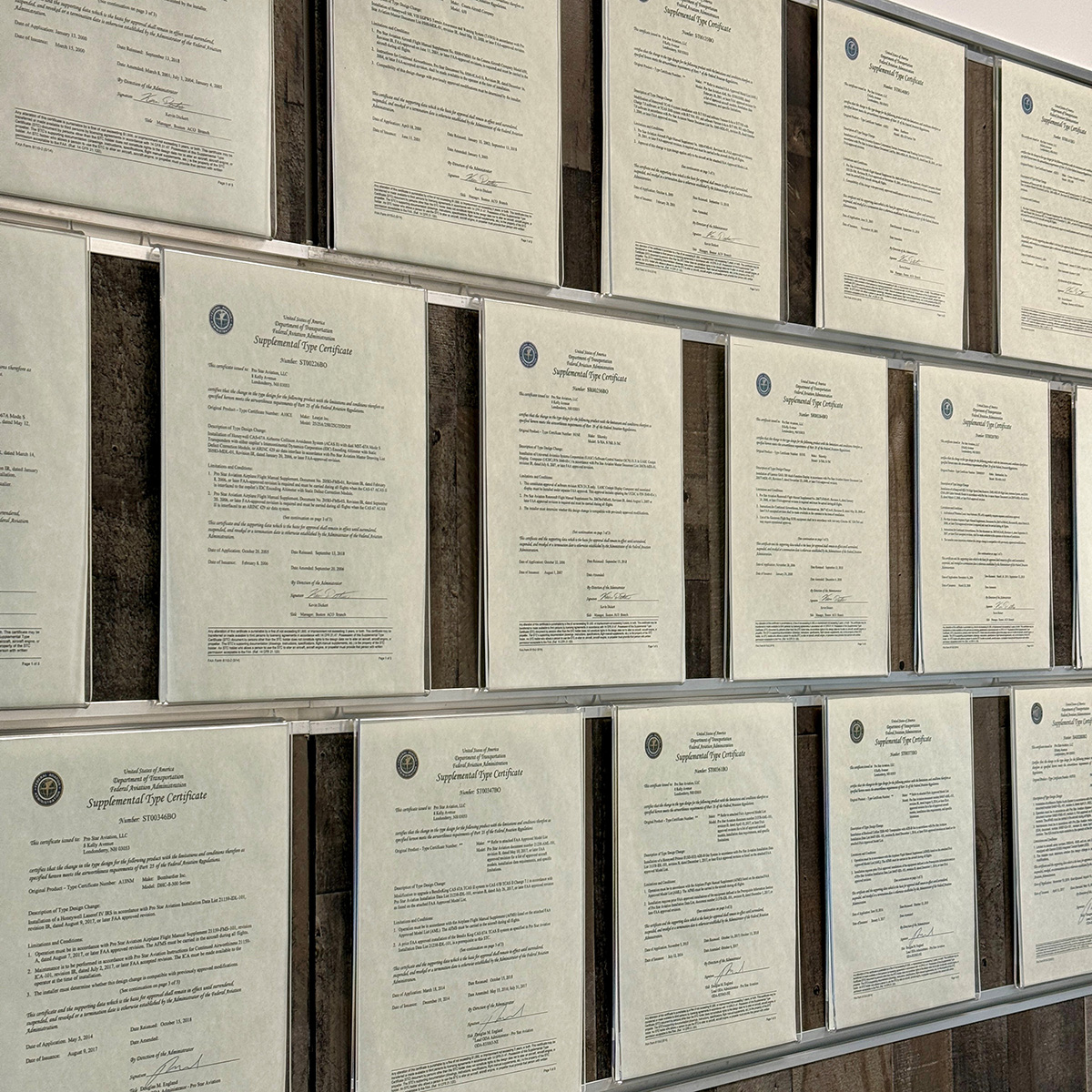
For most aircraft owners and operators, the term STC (Supplemental Type Certificate) is familiar. What may be less clear is how and why STCs are required, and what that actually means when planning a modification.
At a high level, an STC is the FAA’s method for approving major changes to an aircraft’s type design. It supplements the original Type Certificate, which defines the aircraft’s approved configuration, systems, and operating basis.
An STC does not replace the Type Certificate. It amends it only in the areas affected by the modification. If an STC is required, then the FAA has determined the change rises to the level of a major alteration.
When Does a Modification Require an STC?
The line between major and minor changes is not always obvious. A major change can include system upgrades, but it can also cover configuration changes tied to the aircraft’s certification basis. For example, changing the number of passenger seats may not affect how the aircraft flies, but it still alters the approved design. That alone can require an STC.
The FAA also designates certain installations as STC-required, even when operational impact is limited. These determinations often rely on policy and precedent. Two common triggers tend to drive this requirement.
The first is new and novel technology. Any system not envisioned in the aircraft’s original certification basis may fall under this category. This often includes advanced connectivity or emerging avionics. Even if these systems do not significantly change aircraft operation, the FAA may still require an STC to ensure a defined certification path and continued oversight.
The second is large or structurally significant installations, most often antenna systems. The FAA typically classifies these based on size, weight, or structural integration. For example, an antenna that exceeds certain thresholds or spans multiple fuselage sections will typically require an STC, even if it has little to no impact on day-to-day flight operations.
STC Ownership and Installation Rights
Developing an STC requires engineering, testing, and FAA coordination. The organization that completes this work becomes the STC holder. While ownership does not automatically restrict who can install the modification, the STC holder does control how the data is used.
Some holders keep STCs proprietary and perform all installations internally. This allows tighter control over quality, protection of intellectual property, and full capture of installation and data value. Others license the data to third-party maintenance providers. In these cases, broader distribution can accelerate adoption and generate a return on the initial certification investment through lisencing.
When an STC is shared, the installer receives a Letter of Authorization (LOA). This document grants legal permission to use the STC data while also enabling the STC holder to track which aircraft incorporate the modification.
Continued Airworthiness Responsibilities
The STC process does not end after installation, however. The STC holder remains responsible for continued support of the modification. If a design issue emerges or regulatory requirements change, it is the holder’s job to notify all affected operators.
This is why each installation links back to the STC holder through the LOA process, creating a clear record of affected aircraft. For operators, this structure provides meaningful value. It establishes a defined certification and compliance path, ensures clear communication if updates or corrections are required, and supports the long-term airworthiness of the installed system.
Why This Matters for Operators
Understanding the STC process helps explain differences in cost, availability, and installation options. It also explains why two similar upgrades can follow very different certification paths. In some cases, OEMs restrict access to their STCs and limit installations to their network. In others, independent providers license their STCs more broadly.
At Pro Star Aviation, we work within both models. We develop certification solutions and install STCs from multiple sources. That experience allows us to guide customers through both the technical and regulatory sides of a modification. Because at the end of the day, an STC is not just a regulatory requirement. It is the framework that ensures each modification is engineered, approved, and supported over the life of the aircraft.